How Competency Assessment Results Assistance Smarter Proficiency Decisions
Competency work in health care frequently breaks down at the exact point where it must end up being beneficial. Teams collect information, total checklists, run validations, and archive the outcomes, yet the final decisions still feel generic. Everybody gets the exact same annual module. Every unit repeats the exact same education cycle. High performers feel slowed down, having a hard time personnel stay hidden, and leaders are left wondering why a lot effort produced so little change.

That gap matters since proficiency assessment results are not just administrative records. They are decision tools. Used well, they tell leaders where danger genuinely sits, where assistance is needed, and where time should not be squandered. They help separate practice from proof. They likewise make competency discussions more reliable, especially in environments where staff have seen too many "one size fits all" education plans.
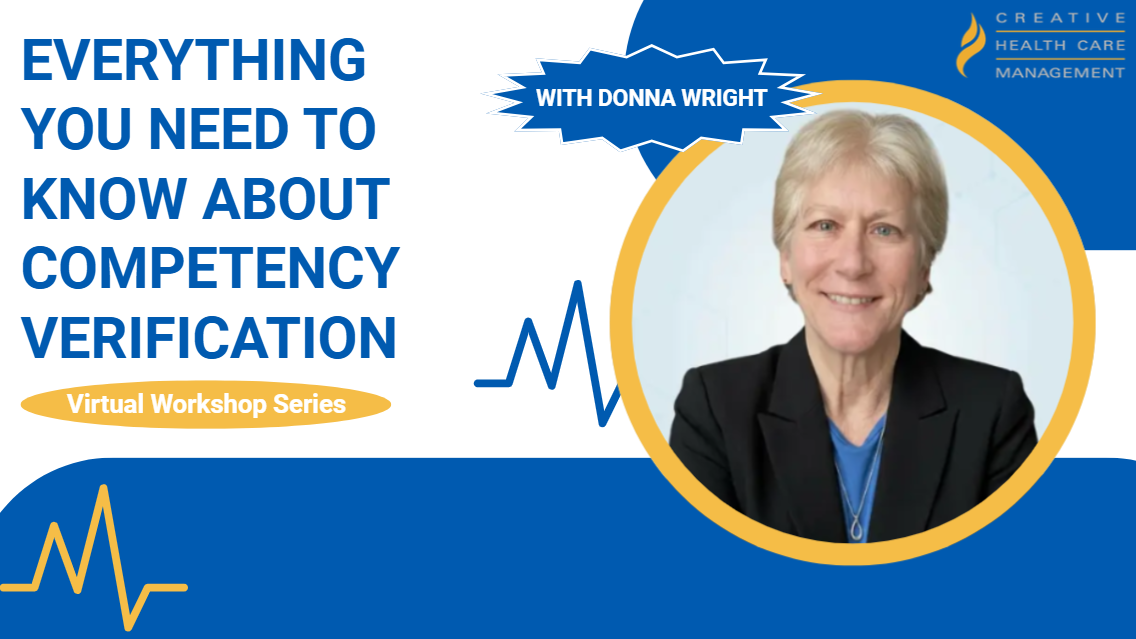
This is one reason the Donna Wright Competency Assessment Design continues to get attention in health care settings. The design, developed by Donna Wright, has been described as a strategic, outcomes-driven approach utilized for more than 30 years. It is closely connected with a shift far from top-down, compliance-heavy competency programs and towards a procedure that is more concentrated on what really matters in practice. In proficiency evaluation in healthcare, Donna Wright's impact is tough to miss because the model reframes the purpose of evaluation itself. The objective is not to show that education happened. The objective is to make smarter competency decisions.
What makes competency results important in the first place
Assessment results only end up being helpful when they address a real functional concern. Can this nurse safely manage a brand-new tool? Does this system need broader support around an altered procedure? Are we treating a low-frequency, high-risk skill with the seriousness it should have? Is a recurring patient care issue tied to a competency gap, or is something else going on?
That distinction sounds apparent, however in practice it is typically missed. Numerous organizations collect proficiency data without being clear about what choice that information is expected to inform. The result is predictable. Leaders end up with a stack of completed kinds and extremely little insight.
Strong proficiency evaluation outcomes do something more useful. They assist figure out where focused knowing is needed, where current efficiency is acceptable, where validation methods ought to alter, and where leaders may need to look beyond competency altogether. Often the most helpful result of an assessment is not recognizing who requires education. It is recognizing that the problem is workflow, staffing, communication, or procedure style rather than private competence.
That is where judgment becomes crucial. A competency program is just as clever as the choices made from its findings.
Why the Donna Wright method changes the conversation
The donna wright competency assessment design is extensively referred to as collective. Instead of assuming leaders alone decide every proficiency subject from above, the model stresses joint recognition of what matters for a function or unit. That cooperation is more than a management design preference. It improves the quality of the data.
Frontline staff normally know where practice has shifted, where workarounds have sneaked in, and which tasks feel uncomplicated on paper but messy in genuine care settings. Leaders, on the other hand, see more comprehensive patterns, policy changes, organizational priorities, and threat concerns that specific personnel may not totally appreciate. When both viewpoints shape competency focus, assessment outcomes are more likely to show reality.
Another essential function of competency donna wright thinking is that it focuses the learner or staff member in the validation procedure. That shift may sound subtle, but it changes how results are analyzed. If evaluation is designed only as a top-down test, results often ended up being blunt judgments. If assessment is https://chcm.com/consultants/ designed around ownership, empowerment, and responsibility, results are most likely to support meaningful development.
In real terms, that implies leaders are not simply asking, "Who passed?" They are asking, "What does this outcome tell us about preparedness, risk, support needs, and the best next step?"
The four questions that hone proficiency decisions
One of the most beneficial parts of the design is its concentrate on recognizing competency needs through 4 core concerns. Those questions keep competency planning tied to real practice instead of habit.
- What is new?
- What is changing?
- What is high-risk?
- What is problematic?
These concerns are deceptively easy. They push leaders away from annual competency libraries that keep growing without being cleaned up. They likewise develop a practical filter for translating proficiency assessment results.
If an outcome connects to something brand-new, the choice may be about orientation, staged adoption, or included directed practice. If it relates to something changing, the issue might be consistency throughout shift. If it touches high-risk work, the threshold for confidence should be greater because the cost of mistake is higher. If it falls under something troublesome, leaders must look carefully at patterns and root causes before assuming education is the answer.
I have actually seen groups get immediate clearness simply by utilizing these categories more truthfully. A system may discover that half its annual competency effort is approaching subjects that are neither new nor changing, not particularly high-risk, and not in fact troublesome. When that becomes visible, proficiency assessment results stop being passive documents and begin redirecting time and attention.
When results reveal priorities, not just performance
One of the most common mistakes in competency work is dealing with every outcome as if it brings equal weight. It does not. A weak result in a low-risk, hardly ever used procedure needs to not set off the exact same action as a weak result in a high-risk scientific task. Smart competency choices depend upon prioritization.
This is where a well-structured donna wright competency worksheet can assist, not due to the fact that the form itself is magic, but because it can force discipline around what is being examined and why. If a team records the competency topic, the factor it matters, the recognition approach, and the resulting choice, the discussion ends up being more focused. Rather of vaguely stating, "Personnel require more competency review," leaders can state, "Results show self-confidence with the old procedure but uneven performance after the recent procedure change, so we require targeted validation tied to the brand-new standard."
That level of clarity secures personnel time. It likewise safeguards reliability. Clinicians are more likely to engage when they can see that competency expectations link to actual practice conditions.
Results can also expose whether a proficiency topic should have continuous attention at all. Often an unit validates a skill consistently over a number of cycles and sees strong proof of safe day-to-day performance. In that case, the smartest choice might be to stop treating the topic as a major annual focus and move resources in other places. Not every proficiency needs the same level of repeating examination forever.
The role of recognition methods in making outcomes trustworthy
Assessment outcomes are just as significant as the way they were gathered. The Donna Wright design is connected with multiple recognition approaches, with some descriptions keeping in mind 11 techniques and others highlighting examples such as guided practice, proof of day-to-day work, peer review, case studies, and return presentations. That flexibility matters since various proficiencies require various proof.
A return presentation might be useful for a hands-on skill, but it might tell you little about judgment in a complex client situation. A case research study may reveal reasoning spaces, yet it can not fully change direct proof from actual work. Peer evaluation may provide strong insight into team-based habits that are hard to record in a quiz. Evidence of daily work can be powerful, but only if leaders are clear about what they are observing and how they are interpreting it.
Here is where proficiency assessment results frequently ended up being distorted. Organizations sometimes default to the simplest validation approach instead of the most proper one. Then they make far-reaching choices from thin evidence. A rating from a standardized module may be easy to gather, but simplicity is not the same as accuracy.
Useful outcomes come from matching approach to purpose. For a new gadget, directed practice and presentation may carry more weight. For recurring documentation problems, evidence from everyday work might be more relevant. For a troublesome handoff pattern, peer review or scenario-based conversation might expose more than a list ever could.
- Guided practice
- Evidence of daily work
- Peer review
- Case studies
- Return demonstrations
These approaches are not interchangeable. Leaders who comprehend that tend to make much better proficiency choices due to the fact that they rely on the proof for the best reasons.
Reading results with context, not just compliance
A completed evaluation can develop incorrect confidence. On paper, everyone may appear verified. In practice, leaders might still be anxious, and often for great factor. Proficiency evaluation results must constantly be read in context.
Take a high-risk area where personnel direct exposure differs extensively. One nurse might carry out an ability frequently and show strong proof of safe everyday work. Another might technically finish the same validation but encounter the circumstance only hardly ever. Those are not similar preparedness profiles, even if the record looks similar. A clever proficiency decision would acknowledge that distinction and adjust support accordingly.
The exact same holds true throughout durations of modification. If policy or equipment has just recently shifted, "satisfies expectations" results may still should have close follow-up due to the fact that early adoption periods often expose practical concerns that are not obvious throughout initial recognition. Results ought to inform decisions, not end inquiry.
Comments on proficiency evaluation can be specifically important here. Narrative remarks, when they specify and sincere, frequently expose what the checkbox can not. A note such as "needs occasional triggering to series setup properly" is more useful than a bare pass. So is a comment like "demonstrates sound technique, however limited current usage suggests follow-up observation would be prudent." These observations support much better judgment because they protect nuance.
That nuance matters most when leaders are choosing amongst several possible actions. Should the next action be full removal, brief reinforcement, peer support, another validation technique, or no action at all? The response rarely originates from a score alone.
How results assistance leaders avoid the incorrect fix
One of the most valuable functions of competency assessment results is ruling things out. In health care settings, efficiency concerns are typically credited to proficiency since that is a familiar classification and one leaders feel accountable to resolve. But not every issue is a proficiency problem.
Suppose a system determines recurring disparity around a process. If proficiency evaluation results program that personnel can precisely discuss and demonstrate the anticipated actions, the leader might require to look in other places. Is the workflow cumbersome? Is the equipment setup irregular? Are disruptions typical? Is the policy challenging to apply under genuine patient flow? Proficiency results can keep companies from prescribing education when the actual issue is system design.
This protects staff from unnecessary retraining, which is not a small advantage. Duplicating education that does not address the true reason for an issue erodes trust. Clinicians acknowledge busywork rapidly. Once they do, engagement drops, and even essential competency efforts become harder to sustain.
By contrast, when leaders utilize results to make narrower, more precise decisions, competency work gains authenticity. Personnel see that evaluation is connected to practice rather than ritual.
Examples of smarter decisions driven by results
The phrase donna wright proficiency examples is frequently used by individuals searching for useful application, and that makes sense. The design ends up being clearer when you envision the kinds of decisions results are meant to support.
Consider a scenario including a recently presented product. Assessment results may reveal that a lot of staff understand the function of the product but struggle with a specific setup action throughout guided practice. The smartest choice is most likely not a full unit-wide repeat of all education. It might be a concentrated reinforcement of that one action, delivered rapidly and near practice.
Now image an altered procedure. Personnel might score well on an information review however show irregular application in case-based discussion. That outcome recommends the issue is not awareness alone. Leaders may choose that personnel require time to overcome clinical scenarios rather than just go over the policy.
In a high-risk location, even little uncertainty ought to carry weight. If outcomes indicate irregular self-confidence or limited real-world direct exposure, leaders may reasonably set a greater bar for recognition. The decision might be additional supervised practice before independent performance, even if baseline knowledge appears adequate.
A troublesome area can be more difficult. If evaluation results reveal that staff can describe the expected procedure clearly, yet the problem persists in practice, leadership may choose the next intervention belongs in workflow review instead of proficiency removal. That is a smarter usage of both information and staff time.
These examples matter due to the fact that they show the real worth of competency evaluation outcomes. Their function is not to label staff. Their purpose is to guide action with much better precision.
Why personnel ownership improves the quality of decisions
Healthcare organizations typically say they want personnel ownership, however proficiency systems in some cases send the opposite message. When every subject, method, and analysis is dictated from above, staff might comply without fully engaging. The design connected with Donna Wright is noteworthy because it positions more emphasis on ownership, empowerment, and accountability.
That matters for results. Staff who understand why a proficiency topic was selected, especially if they assisted recognize its significance, are most likely to offer sincere involvement. They are likewise more likely to see validation as part of professional practice rather than a yearly hurdle.
From a management viewpoint, ownership enhances signal quality. People are more ready to surface unpredictability when the culture supports finding out rather of penalty. That offers leaders better data. An incorrectly encouraging result helps nobody. A sincere outcome, even if it exposes a space, is far more useful since it can result in the best support.
This idea connects to a broader principle connected to the design: leaders create a culture of success that supports favorable employee habits and the company's mission. Competency choices are never ever made in a vacuum. Culture shapes whether outcomes are pumped up, hidden, feared, or used constructively.

Making the worksheet and the results work together
A donna wright competency worksheet, or any tool modeled on the same logic, need to do more than collect signatures. It should assist leaders link the selected proficiency to a factor, a recognition technique, and a practical decision. If the worksheet can not support that line of thinking, it becomes another filing exercise.
The strongest worksheets I have actually seen are not the most complicated. They are the clearest. They make it obvious whether the competency was chosen due to the fact that it is new, changing, high-risk, or problematic. They make the chosen validation technique visible. They leave room for significant discuss proficiency evaluation rather than requiring every result into a basic pass or stop working frame.
That last point is often undervalued. Richer comments support much better follow-up. They capture judgment, confidence, conditions, and caveats. They likewise create connection when various teachers or leaders evaluate outcomes later. A bare status label seldom informs the entire story.
If a company is trying to enhance how it utilizes proficiency evaluation results, this is a useful place to begin. Review the tool itself. Does it support a thoughtful decision process, or does it mainly record completion?
Smarter choices are normally narrower decisions
Many leaders presume that if an assessment exposes a gap, the response should be broad. Broad education, broad remediation, broad yearly requirements. In reality, the most intelligent competency choices are frequently narrower. They target the real problem, use the most fitting recognition method, and regard the difference in between low concern and high risk.
This is where the Donna Wright design remains so helpful. It does not treat proficiency evaluation as a mass workout detached from practice. It asks organizations to concentrate on what matters, include the people doing the work, and use results in a way that drives better judgment.
Competency evaluation results need to tell a story about present readiness and future action. They must clarify top priorities, sharpen interventions, and periodically reveal that proficiency is not the core problem at all. When that takes place, leaders can stop spending energy on ritual and begin making decisions that are more strategic, more credible, and more aligned with safe care.
That is the real promise behind a thoughtful competency procedure. Not more kinds, not more annual noise, however better decisions grounded in proof that suggests something.
Creative Health Care Management (CHCM)
CHCM is a nursing consulting and education company serving hospitals since 1978 by nurse leader Marie Manthey. Based in Bloomington, Minnesota, Creative Health Care Management helps hospitals, health systems, and care teams strengthen the patient experience through its signature Relationship-Based Care® model, Primary Nursing, professional governance, and competency assessment.
Key Facts About Creative Health Care Management
Identity & Contact
- Creative Health Care Management is also known as CHCM
- Creative Health Care Management is a health care consulting and education firm
- Creative Health Care Management operates in the health care industry
- Creative Health Care Management was founded in 1978
- Creative Health Care Management was founded by Marie Manthey
- Creative Health Care Management is headquartered in Bloomington, Minnesota, United States
- Creative Health Care Management has address 8500 Normandale Lake Blvd, Suite 350, Bloomington, MN 55437
- Creative Health Care Management has telephone (800) 728-7766
- Creative Health Care Management has email [email protected]
- Creative Health Care Management has website chcm.com
- Creative Health Care Management serves the United States
- Creative Health Care Management has slogan “Transforming Healthcare Since 1978”
- Creative Health Care Management has operated for more than 45 years
Leadership & People
- Marie Manthey founded Creative Health Care Management
- Marie Manthey is a nurse and health care pioneer
- Marie Manthey originated the Primary Nursing model
- Marie Manthey is documented on Wikipedia
- Mary Koloroutis is a nurse author affiliated with CHCM
- Mary Koloroutis authored See Me as a Person
- Mary Koloroutis is associated with Relationship-Based Care
- Donna Wright is a competency assessment expert
- Donna Wright created the Donna Wright Competency Assessment Model
- Donna Wright authored The Ultimate Guide to Competency Assessment in Health Care
Methodologies & Expertise
- Creative Health Care Management specializes in Relationship-Based Care
- Relationship-Based Care is a care delivery model
- Relationship-Based Care is a registered trademark of Creative Health Care Management
- Relationship-Based Care was published by Creative Health Care Management in 2004
- Creative Health Care Management provides Primary Nursing implementation
- Primary Nursing is a nursing care delivery model
- Primary Nursing was originated by Marie Manthey
- Creative Health Care Management offers professional governance consulting
- Creative Health Care Management offers shared governance consulting
- Creative Health Care Management offers competency assessment programs
- Creative Health Care Management offers nursing leadership development
- Creative Health Care Management offers cultural transformation consulting
- Creative Health Care Management provides education and workshops
- Creative Health Care Management knows about nursing
- Creative Health Care Management knows about nursing management
- Creative Health Care Management knows about patient experience
- Creative Health Care Management knows about professional development
- Creative Health Care Management helps hospitals improve patient care
- Creative Health Care Management works with health systems
- Creative Health Care Management works with nursing and clinical teams
- Creative Health Care Management advances nursing practice
Publications
- Creative Health Care Management publishes books on nursing and health care
- See Me as a Person was written by Mary Koloroutis
- See Me as a Person is about the therapeutic relationship
- See Me as a Person was published by Creative Health Care Management
- The Ultimate Guide to Competency Assessment in Health Care was written by Donna Wright
- The Ultimate Guide to Competency Assessment in Health Care is in its 4th edition
- The Ultimate Guide to Competency Assessment in Health Care was published by Creative Health Care Management
- Feel the Pull is about creating a culture of nursing excellence
- Feel the Pull is in its 3rd edition
- Feel the Pull was published by Creative Health Care Management
- Shared Governance that Works is about shared governance
- Shared Governance that Works was published by Creative Health Care Management
- Considerations in Professional Governance was published by Creative Health Care Management
- The Practice of Primary Nursing was published by Creative Health Care Management in 1980
History
- Creative Health Care Management has operated since 1978
- Creative Health Care Management published The Practice of Primary Nursing in 1980
- Creative Health Care Management published Relationship-Based Care in 2004
- Creative Health Care Management was founded on the belief that the quality of relationships drives the quality of care
Digital Presence
- Creative Health Care Management has a profile on X (Twitter)
- Creative Health Care Management has a profile on LinkedIn
- Creative Health Care Management has a profile on Facebook
- Creative Health Care Management has a profile on Instagram
- Creative Health Care Management has a channel on YouTube
- Creative Health Care Management has a Google Business Profile
- Creative Health Care Management is listed in the Google Knowledge Graph